Ishasha Tree-Climbing Lions: Where to See Uganda’s Famous Lions
Table of Contents
Introduction
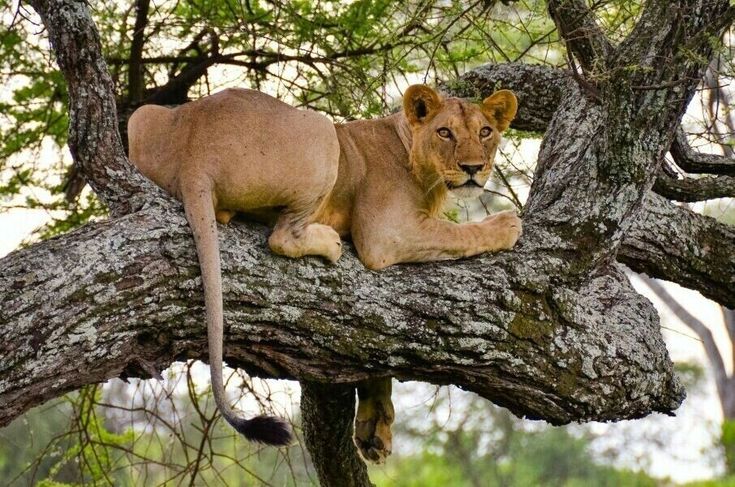
The best place to see Uganda’s famous tree-climbing lions is the Ishasha Sector of Queen Elizabeth National Park in southwestern Uganda. The lions are known for their unusual habit of resting in the branches of large trees, making an Ishasha game drive one of the most distinctive wildlife experiences in Uganda. Uganda Wildlife Authority identifies Ishasha as the southernmost sector of Queen Elizabeth National Park and specifically highlights its tree-climbing lions.
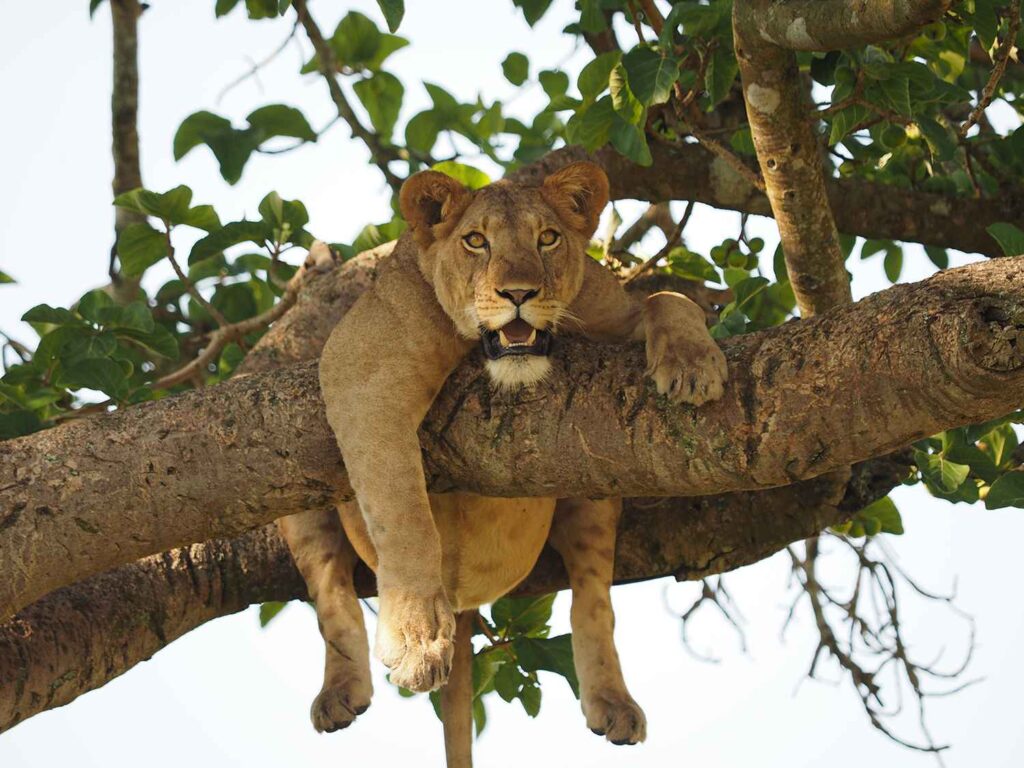
Unlike a conventional lion sighting on the savannah, an Ishasha encounter may involve looking upward into the branches of a fig tree to find a pride resting above the ground.
For travelers planning a Uganda wildlife safari, this unusual behavior makes Ishasha particularly attractive for photographers, wildlife enthusiasts, and visitors combining Queen Elizabeth with Bwindi gorilla trekking.
Where Can You See Tree-Climbing Lions in Uganda?
You can see Uganda’s most famous tree-climbing lions in the Ishasha Sector of Queen Elizabeth National Park.
Ishasha lies in the southern part of Queen Elizabeth National Park, close to Uganda’s border with the Democratic Republic of Congo.
UWA‘s Queen Elizabeth National Park information identifies Ishasha as a major attraction because of its tree-climbing lions.
The sector is characterized by:
- Open savannah
- Fig trees
- Acacia trees
- Woodlands
- Ishasha River
- Wetlands
- Large herbivore populations
- Lions and other predators
The landscape is considerably different from the central Mweya area of Queen Elizabeth, making Ishasha worth considering as a separate safari experience.
Why Are Ishasha Lions Famous?
Ishasha lions are famous because they regularly display tree-climbing behavior that is unusual among African lions.
Most lions spend the majority of their time on the ground.
In Ishasha, however, lions can sometimes be found resting high in the branches of large trees overlooking the surrounding plains.
The Uganda Wildlife Authority’s Queen Elizabeth management plan specifically records a high number of tree-climbing lions in the southern Ishasha Sector and identifies fig trees as their preferred climbing trees.
This behavior has become one of the defining wildlife attractions of southwestern Uganda.
Why Do the Lions in Ishasha Climb Trees?
The exact reason Ishasha lions climb trees is not completely established, but researchers and field observers have proposed several possible explanations.
Potential advantages may include:
- Escaping insects
- Avoiding ground-level disturbance
- Cooling off
- Obtaining an elevated view of the surrounding area
- Resting comfortably on broad branches
It is important not to present one explanation as proven fact.
Recent safari research and field accounts continue to describe the behavior as unusual and not completely understood.
That uncertainty is part of what makes the behavior scientifically interesting.
The lions are not a different species or subspecies simply because they climb trees. They are African lions displaying an unusual behavioral pattern.
Which Trees Do Ishasha Lions Climb?
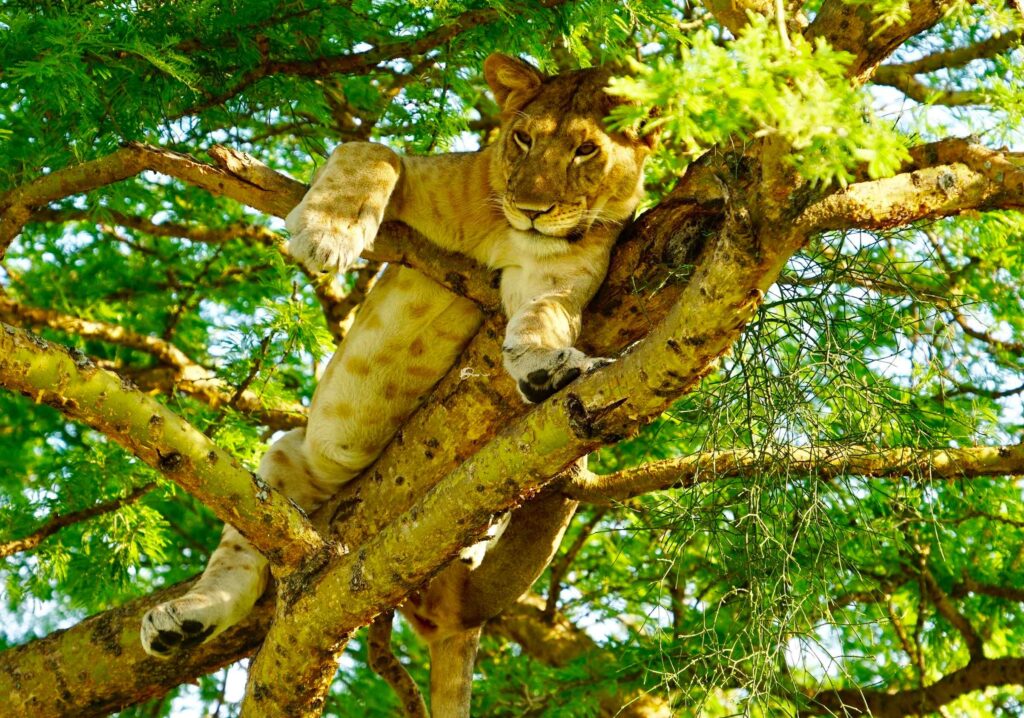
Ishasha lions are particularly associated with large fig trees that have strong, broad branches capable of supporting resting lions.
UWA’s Queen Elizabeth management documentation specifically identifies Ficus trees as favored trees for the tree-climbing lions.
Depending on the area and individual animals, lions may also be observed using other suitable trees.
The important factor is the structure of the tree.
A lion needs a branch that can support its weight while providing enough space to lie down comfortably.
This creates a distinctive safari scene:
Lion + fig tree + open Ishasha savannah
Are Tree-Climbing Lions Only Found in Uganda?
No. Habitual tree-climbing lions are also famously associated with Tanzania, particularly the Lake Manyara area.
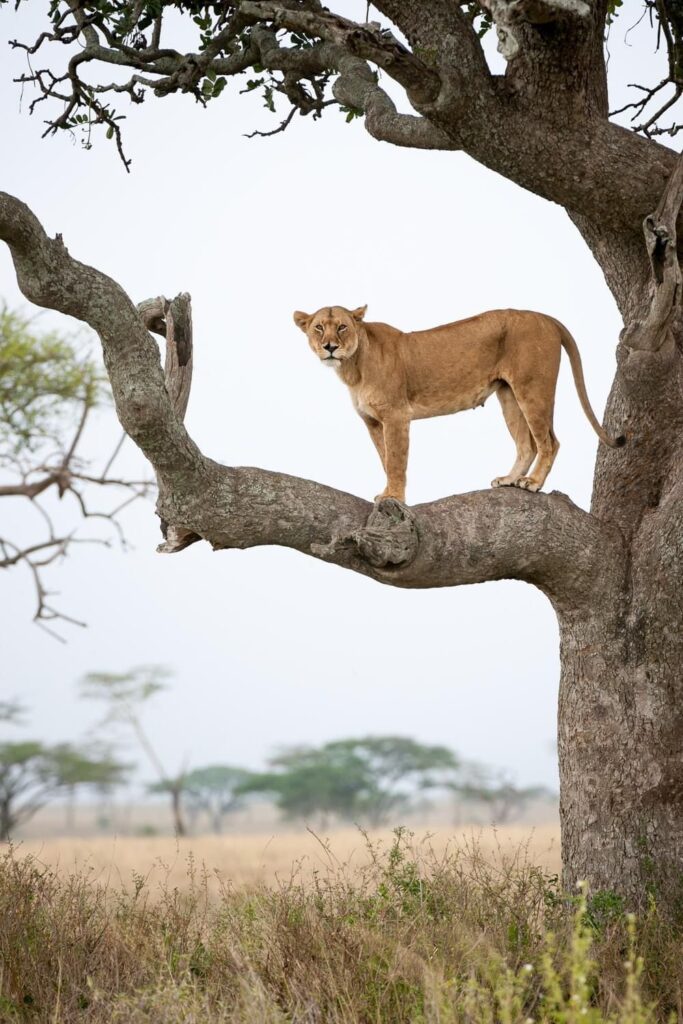
Uganda’s Ishasha Sector and Tanzania’s Lake Manyara are the two destinations most strongly associated with this behavior.
Occasional observations of lions climbing trees have been reported elsewhere, but Ishasha is particularly famous because the behavior is regularly associated with the local lion population.
This makes Uganda an especially interesting destination for travelers who want to combine traditional African wildlife with unusual animal behavior.
What Is the Ishasha Sector of Queen Elizabeth National Park?
Ishasha is the southern sector of Queen Elizabeth National Park and one of Uganda’s best-known areas for tree-climbing lions.
The sector offers more than lions.
During a game drive, travelers may encounter:
- African elephants
- Buffaloes
- Uganda kobs
- Topis
- Warthogs
- Waterbucks
- Hippos
- Antelope
- Various bird species
The Ishasha River and surrounding plains create a productive wildlife habitat.
Its location also makes Ishasha strategically useful for travelers moving between Queen Elizabeth National Park and Bwindi Impenetrable National Park.
That makes it possible to combine wildlife viewing with mountain gorilla trekking in one itinerary.
Are There Other Animals in Ishasha?
Yes. Ishasha supports a range of wildlife beyond its famous lions.
A typical game drive can involve searching for:
Elephants
Elephants can be encountered around the savannah and water sources.
Buffaloes
Large buffalo herds are among the area’s important herbivore attractions.
Uganda Kobs
The open plains provide habitat for Uganda kobs, which are also important prey animals for predators.
Topis
Topis contribute to the diversity of antelope found in the sector.
Hippos
Hippos can occur around the Ishasha River and associated waterways.
Warthogs
These distinctive savannah animals can often be spotted feeding or moving through open areas.
The exact wildlife encountered varies from day to day because animals move freely through the ecosystem.
Can You See Leopards in Ishasha?
Leopards occur in Queen Elizabeth National Park, although seeing one is considerably less predictable than seeing common herbivores.
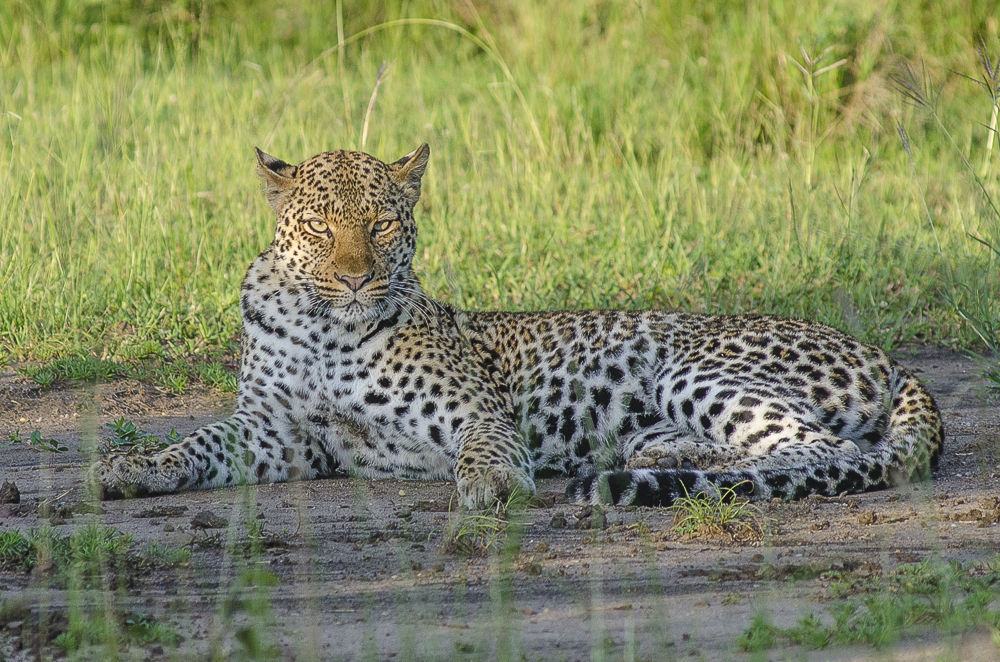
Leopards are solitary and elusive predators.
Unlike the tree-climbing lions, which have become strongly associated with Ishasha tourism, leopard sightings depend heavily on:
- Time of day
- Habitat
- Recent wildlife activity
- Guide experience
- Luck
A professional safari guide can help interpret tracks, alarm calls, and other signs, but no ethical operator should guarantee a leopard sighting.
What Is the Best Time to See Tree-Climbing Lions?
Tree-climbing lions can be encountered throughout the year, but the best opportunity depends on lion behavior, weather, recent sightings and the time spent in Ishasha.
There is no month that guarantees tree-climbing lions.
The important distinction is between:
Being in Ishasha
and
Finding the lions in the trees on the day of your game drive.
Wild animals do not follow tourist schedules.
For that reason, spending adequate time in the sector and using an experienced guide can be more valuable than choosing a specific month solely because someone claims it guarantees tree-climbing lions.
What Time of Day Is Best for Tree-Climbing Lions?
Tree-climbing lions are often searched for during the warmer part of the day when resting in trees can be particularly advantageous, but sightings can occur at different times.
Lions spend considerable periods resting.
During a game drive, your guide may check known areas and suitable trees where lions have recently been observed.
The exact location changes.
A good strategy is therefore to allow enough time for a proper game drive rather than treating Ishasha as a quick roadside stop.
How Long Should You Spend in Ishasha?
One full game-drive period can provide an introduction to Ishasha, while an overnight stay gives you more opportunity to explore the sector at a relaxed pace.
A traveler passing through between Queen Elizabeth and Bwindi may choose:
Morning game drive → lunch → continue toward Bwindi
A traveler focused on photography or wildlife may prefer:
Arrival → afternoon game drive → overnight → morning game drive
The second option gives you more time to explore.
It also reduces the pressure to find the lions within a very short window.
How Long Is an Ishasha Game Drive?
The duration depends on your safari itinerary, park conditions, and the areas your guide chooses to explore.
A typical wildlife drive may last several hours, especially when travelers are actively searching for predators.
The goal should not be to drive continuously.
A good safari allows time to:
- Observe animals
- Photograph wildlife
- Listen to the guide
- Watch behavior
- Stop safely
- Explore different habitats
This is particularly important when searching for tree-climbing lions because the animals may be difficult to spot from a distance.
Can You Combine Ishasha With Bwindi Gorilla Trekking?
Yes. Ishasha is one of the best wildlife stops to combine with Bwindi gorilla trekking.
The two destinations complement one another exceptionally well.
Ishasha
Tree-climbing lions + savannah wildlife
Bwindi
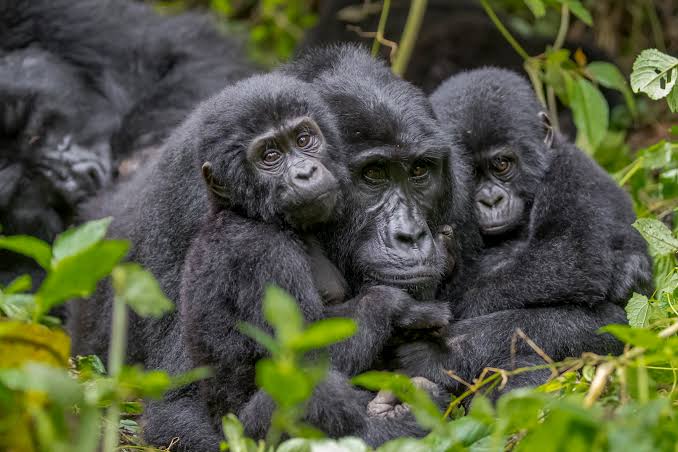
Mountain gorillas + ancient rainforest
A combined route can look like:
Queen Elizabeth → Ishasha → Bwindi
or:
Kigali → Bwindi → Ishasha → Queen Elizabeth
The exact direction depends on your arrival airport and onward itinerary.
UWA recognizes the Queen Elizabeth–Ishasha–Bwindi route as an important connection between these western Uganda destinations.
For travelers seeking a broader Uganda experience, this is one of the strongest combinations available.
Can You Combine Ishasha With the Kazinga Channel?
Yes. Ishasha and the Kazinga Channel can be combined within a Queen Elizabeth National Park itinerary.
The experiences are complementary.
Ishasha
Focuses on:
- Tree-climbing lions
- Savannah
- Predators
- Herbivores
- Photography
Kazinga Channel
Focuses on:
- Hippos
- Crocodiles
- Elephants
- Buffaloes
- Waterbirds
This gives travelers both a land-based and water-based wildlife experience.
A well-designed itinerary could therefore include:
Morning Ishasha game drive → transfer toward central Queen Elizabeth → Kazinga Channel cruise
The exact arrangement should account for driving conditions and current activity schedules.
Is Ishasha Worth Visiting?
Yes, Ishasha is worth visiting if unusual wildlife behavior, photography, and a quieter western Uganda safari experience are priorities.
It is especially worthwhile for travelers who are already traveling between Queen Elizabeth and Bwindi.
The sector adds an experience that cannot simply be replicated by a standard game drive elsewhere in Uganda.
Instead of only seeing lions on the ground, you have the possibility of finding them:
resting in the branches of a fig tree above the savannah.
That is one of the most distinctive wildlife scenes in Uganda.
Ishasha vs Kasenyi: Which Is Better?
Ishasha and Kasenyi offer different wildlife experiences, so the better choice depends on your safari priorities.
| Feature | Ishasha | Kasenyi |
|---|---|---|
| Location | Southern Queen Elizabeth | Central/northern Queen Elizabeth |
| Famous for | Tree-climbing lions | Uganda kobs & predators |
| Landscape | Southern savannah | Open plains |
| Gorilla combination | Excellent | Less direct |
| Photography | Excellent | Excellent |
| Wildlife diversity | High | High |
| Main attraction | Ishasha lions | Game drives |
If your priority is specifically tree-climbing lions, Ishasha is the obvious choice.
If your itinerary is centered around Mweya and the Kazinga Channel, Kasenyi may be more convenient.
For travelers with enough time, visiting both can provide a broader Queen Elizabeth experience.
What Should You Pack for an Ishasha Safari?
Pack lightweight safari clothing, binoculars, a camera, sun protection, insect repellent, and a light rain jacket.
Recommended items include:
- Neutral-colored clothing
- Comfortable closed shoes
- Wide-brimmed hat
- Sunglasses
- Sunscreen
- Insect repellent
- Binoculars
- Camera
- Telephoto lens if available
- Extra camera batteries
- Light rain jacket
- Reusable water bottle
- Small daypack
For travelers continuing to Bwindi, bring suitable hiking footwear and forest clothing for gorilla trekking.
Is Ishasha Suitable for Photography?
Yes. Ishasha is particularly attractive to wildlife photographers because tree-climbing lions create unusual compositions against the savannah landscape.
Photographers may capture:
- Lions resting in fig trees
- Lion portraits
- Lions silhouetted against the sky
- Elephant herds
- Buffaloes
- Uganda kobs
- Savannah landscapes
- River scenes
- Birdlife
A telephoto lens is useful for wildlife, while a wider lens can help capture the surrounding environment.
The most important photography principle is patience.
Do not rush the encounter simply to obtain a photograph.
The animal’s welfare and the park’s rules come first.
Is Ishasha a Good Luxury Safari Destination?
Yes. Ishasha can be incorporated into a private luxury Uganda safari, especially when paired with carefully selected accommodation and a flexible private vehicle.
Luxury in Ishasha should mean more than simply selecting an expensive lodge.
A well-designed luxury experience should provide:
- Private safari vehicle
- Experienced guide
- Comfortable accommodation
- Flexible game drives
- Well-planned transfers
- Personalized itinerary
- Quality meals
- Photography opportunities
- Minimal unnecessary driving
For Kambu Tours, Ishasha is particularly valuable as part of a private Queen Elizabeth and Bwindi itinerary rather than as a standalone destination.
Is Ishasha Safe for Safari Travelers?
Ishasha is a regulated wildlife tourism area, and visitors should follow the instructions of their safari guide and Uganda Wildlife Authority personnel.
Lions, elephants, buffaloes, and other wildlife are wild animals.
Visitors should:
- Remain inside the safari vehicle unless instructed otherwise
- Never approach wildlife
- Never feed animals
- Avoid loud noises
- Follow guide instructions
- Keep a safe distance
- Avoid attempting to attract animals for photographs
Responsible wildlife viewing protects both visitors and animals.
What Makes Ishasha Different From Other Uganda Safari Destinations?
Ishasha’s biggest distinction is its combination of tree-climbing lions, southern savannah landscapes, and its strategic position between Queen Elizabeth and Bwindi.
Compare some of Uganda’s major destinations:
| Destination | Signature experience |
|---|---|
| Ishasha | Tree-climbing lions |
| Queen Elizabeth | Wildlife + Kazinga Channel |
| Bwindi | Mountain gorillas |
| Kibale | Chimpanzee trekking |
| Murchison Falls | Nile + savannah wildlife |
| Kidepo Valley | Remote wilderness |
| Mgahinga | Gorillas + Virunga mountains |
This makes Ishasha particularly valuable within a multi-destination itinerary.
How Do You Get to Ishasha?
Most travelers reach Ishasha by safari vehicle as part of a western Uganda circuit.
The sector can be incorporated into routes involving:
From Entebbe or Kampala
Kampala/Entebbe → Queen Elizabeth → Ishasha → Bwindi
From Bwindi
Bwindi → Ishasha → Queen Elizabeth
From Kigali
Kigali → Bwindi → Ishasha → Queen Elizabeth
The most efficient direction depends on your complete itinerary, accommodation, and gorilla permit sector.
Because road conditions can vary, travelers should allow adequate time rather than building a tightly compressed schedule.
How Much Does an Ishasha Safari Cost?
There is no single fixed Ishasha safari price because the total cost depends on accommodation, vehicle type, number of travelers, safari duration and the activities included.
Your overall cost may include:
| Component | Cost consideration |
|---|---|
| Park fees | Applicable UWA tariff |
| Accommodation | Budget varies by property/category |
| Safari vehicle | Private or shared |
| Driver-guide | Usually included in private safari |
| Game drives | Included according to itinerary |
| Meals | Depends on lodge/package |
| Kazinga cruise | Additional activity |
| Gorilla permit | Additional if combining with Bwindi |
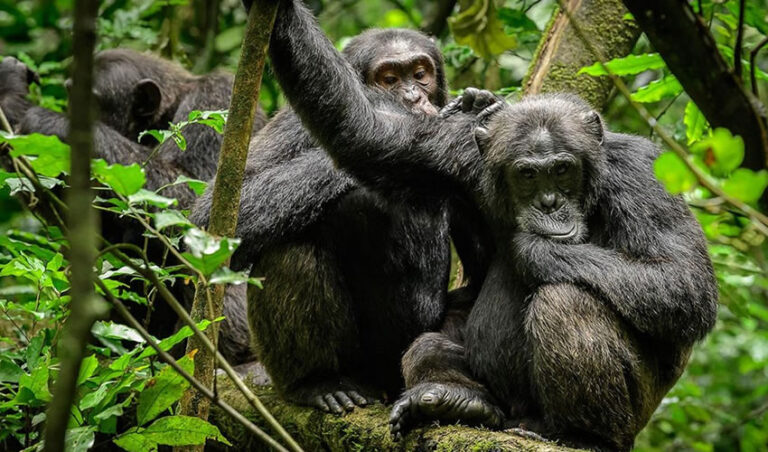
| Chimpanzee permit | Additional if adding Kyambura/Kibale |
| Airport transfers | Depends on route |
Because official wildlife fees and tourism costs can change, Kambu should avoid publishing outdated fixed figures and instead provide a customized quotation based on the traveler’s dates and requirements.
For current park fees, UWA should remain the authoritative reference.
Best Ishasha Safari Itinerary
A two-day Ishasha visit can work for travelers passing through, while adding Ishasha to a longer Queen Elizabeth and Bwindi itinerary creates a much richer experience.
3-Day Queen Elizabeth & Ishasha Safari
Day 1: Arrive in Queen Elizabeth + game drive
Day 2: Transfer toward Ishasha + game drive searching for tree-climbing lions
Day 3: Morning Ishasha game drive + continue toward Bwindi
5-Day Wildlife & Gorilla Safari
Day 1: Entebbe → Queen Elizabeth
Day 2: Game drive + Kazinga Channel
Day 3: Ishasha game drive → Bwindi
Day 4: Gorilla trekking
Day 5: Bwindi → onward destination
7-Day Primates, Wildlife & Gorillas
Day 1: Entebbe → Kibale
Day 2: Chimpanzee trekking
Day 3: Kibale → Queen Elizabeth
Day 4: Game drive + Kazinga Channel
Day 5: Ishasha → Bwindi
Day 6: Gorilla trekking
Day 7: Bwindi → Entebbe/Kigali
This longer itinerary demonstrates why Ishasha is best treated as part of a larger Uganda wildlife and primate safari cluster.
Ishasha Tree-Climbing Lions: Quick Facts
| Question | Answer |
|---|---|
| Where are they? | Ishasha Sector, Queen Elizabeth National Park |
| What makes them special? | Habitual tree-climbing behavior |
| Preferred trees | Large fig trees and suitable broad-branched trees |
| Can sightings be guaranteed? | No |
| Best activity | Game drive |
| Other wildlife | Elephants, buffaloes, kobs, topis, hippos and others |
| Near Bwindi? | Yes, strategically connected |
| Can combine with gorillas? | Yes |
| Can combine with Kazinga Channel? | Yes |
| Good for photography? | Excellent |
| Suitable for private safaris? | Yes |
UWA’s management documentation specifically identifies Ishasha’s tree-climbing lions and notes Ficus trees as favored climbing trees.
Frequently Asked Questions About Ishasha Tree-Climbing Lions
Where can I see tree-climbing lions in Uganda?
The best-known place is the Ishasha Sector of Queen Elizabeth National Park in southwestern Uganda.
Why do lions climb trees in Ishasha?
The exact reason is not fully established, but possible explanations include escaping insects, cooling down, and gaining an elevated position.
Are Ishasha lions a different species?
No. They are African lions displaying unusual tree-climbing behavior.
Can I see tree-climbing lions all year?
Yes, the lions live in Ishasha throughout the year, but whether they are in trees when you visit cannot be guaranteed.
How long should I spend in Ishasha?
A full game-drive period can work, but an overnight stay gives you more flexibility to explore the sector.
Can I combine Ishasha with Bwindi?
Yes. Ishasha and Bwindi form a particularly strong wildlife-and-gorilla combination.
Can I see tree-climbing lions from a safari vehicle?
Yes. Game drives are the primary way visitors search for the lions while following park regulations and guide instructions.
Is Ishasha worth visiting without gorilla trekking?
Yes. Ishasha is worthwhile as a wildlife destination on its own, particularly for travelers interested in unusual lion behavior and photography.
Is Ishasha part of Queen Elizabeth National Park?
Yes. Ishasha is the southern sector of Queen Elizabeth National Park.
Are tree-climbing lions guaranteed on safari?
No. They are wild animals, and responsible safari operators should never guarantee a sighting.
Plan an Ishasha Tree-Climbing Lion Safari
Ishasha is one of the most distinctive wildlife experiences to add to a Uganda safari.
The opportunity to watch lions resting in the branches of large fig trees is unusual even by African safari standards.
For the strongest itinerary, combine Ishasha with the experiences around it:
Kibale → Queen Elizabeth → Kazinga Channel → Ishasha → Bwindi
That creates a journey through:
Chimpanzees → Savannah wildlife → Hippos and crocodiles → Tree-climbing lions → Mountain gorillas
For travelers seeking a private safari, Kambu Tours can build the route around your travel dates, preferred accommodation, gorilla permit availability, and desired safari pace.
Explore Kambu Tours Uganda Safari Packages