Semuliki National Park Safari: Hot Springs, Wildlife, Birding & Things to Do
Semuliki National Park is a unique lowland tropical rainforest destination in western Uganda, best known for Sempaya Hot Springs, exceptional bird diversity, Central African forest species, primates, and the Semuliki River. It is an excellent choice for travelers looking beyond Uganda’s better-known gorilla and savannah safari destinations.
Table of Contents
Introduction
Located on the floor of the Albertine Rift near the Democratic Republic of Congo, Semuliki protects a forest ecosystem with strong ecological connections to the Congo Basin. Uganda Wildlife Authority describes it as a biodiversity-rich destination where Central African species reach the eastern edge of their ranges.
For travelers planning a Semuliki National Park safari, the park offers a very different experience from Murchison Falls, Queen Elizabeth or Kidepo. Instead of focusing primarily on large savannah mammals, Semuliki is about rainforest exploration, birding, primates, hot springs, wildlife, and biodiversity.
Where Is Semuliki National Park?
Semuliki National Park is located in western Uganda in the Albertine Rift, near Fort Portal and the border with the Democratic Republic of Congo.
The Semuliki River forms part of the international boundary with the DRC, while the Rwenzori Mountains rise nearby. The park’s location at the intersection of different ecological zones helps explain its unusually high biodiversity.
The journey from Kampala to Fort Portal via Mubende is approximately 180 kilometres, according to the Uganda Wildlife Authority, with the drive generally taking around four to five hours under normal road conditions. UWA also provides an alternative longer route through Masaka, Mbarara and Kasese.
This makes Semuliki particularly suitable for travelers combining western Uganda with:
- Fort Portal
- Kibale Forest
- Queen Elizabeth National Park
- Rwenzori Mountains
- Toro-Semliki Wildlife Reserve
For a broader overview of Uganda’s protected areas, see Kambu Tours’ National Parks in Uganda and Game Reserves.
Why Visit Semuliki National Park?
Visit Semuliki for its unusual Central African rainforest biodiversity, Sempaya Hot Springs, exceptional birding, primate encounters and less conventional safari experience.
The park is particularly attractive to:
- Birdwatchers
- Wildlife photographers
- Primate enthusiasts
- Nature lovers
- Eco-tourists
- Travelers interested in biodiversity
- Repeat Uganda visitors
- Travelers combining Semuliki with Kibale or Rwenzori
- Visitors looking for quieter destinations
UWA describes Semuliki as a biodiversity hotspot with more than 120 mammal species and more than 435 recorded bird species on its current park information page.
A 2026 UWA environmental assessment also describes Semuliki as a distinct Albertine Rift ecosystem with strong Congo Basin affinities and exceptional species diversity.
What Is Semuliki National Park Famous For?
Semuliki is most famous for Sempaya Hot Springs, Central African forest biodiversity, rare birds, primates and its unusual lowland tropical rainforest ecosystem.
The park’s major attractions include:
- Sempaya Hot Springs
- Birdwatching
- Forest wildlife
- Primate encounters
- Semuliki River
- Nature walks
- Cultural experiences
- Congo Basin-influenced biodiversity
This combination makes Semuliki one of Uganda’s most distinctive nature destinations.
What Are the Sempaya Hot Springs?
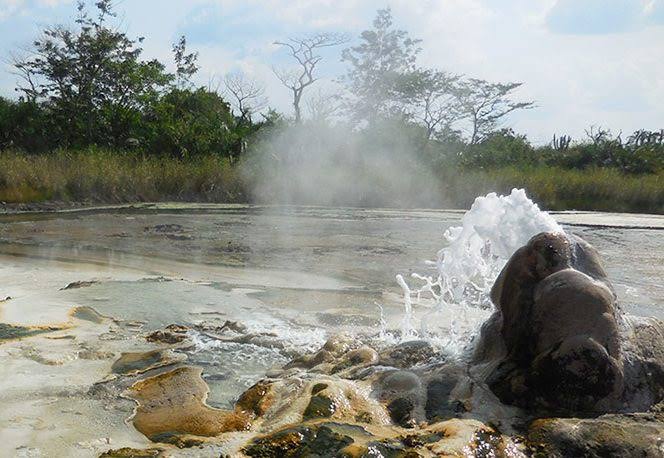
The Sempaya Hot Springs are geothermal springs where hot water and steam emerge from underground, providing one of Semuliki National Park’s most recognizable natural attractions.
The springs demonstrate the geological forces associated with the Albertine Rift.
Visitors follow designated trails toward the hot springs and can observe steam rising from the geothermal area.
The experience is especially interesting because Semuliki’s rainforest setting contrasts dramatically with the exposed geothermal features.
The springs are therefore more than a sightseeing stop—they provide an opportunity to understand how geological processes have influenced the landscape.
What Animals Can You See in Semuliki National Park?
Semuliki supports a wide variety of mammals, including elephants, chimpanzees, primates, forest antelopes, hippos and crocodiles, although wildlife sightings in a rainforest are naturally less predictable than on open savannah.
Some of the wildlife associated with Semuliki includes:
| Wildlife | Safari significance |
|---|---|
| Elephants | Forest and savannah-associated elephants occur in the wider ecosystem |
| Chimpanzees | One of the park’s important primate attractions |
| Baboons | Frequently associated with forest and woodland habitats |
| Monkeys | Several primate species occur in the park |
| Hippos | Associated with waterways including the Semuliki River |
| Crocodiles | Found around suitable aquatic habitats |
| Forest antelopes | Important component of the rainforest ecosystem |
| Forest buffalo | A notable forest mammal |
| Bats | Several species contribute to the park’s biodiversity |
UWA’s current information also notes that Semuliki’s fauna includes species with strong Central African affinities.
A 2026 UWA environmental assessment identifies several mammals of particular regional significance, including species recorded nowhere else in Eastern Africa.
Is Semuliki National Park Good for Birding?
Yes. Semuliki is one of Uganda’s most important birdwatching destinations, particularly for travelers searching for Central African and Guinea-Congo forest species.
UWA specifically identifies Semuliki as the only place in East Africa where many Guinea-Congo regional bird species can be seen.
The park’s birding value comes from its location at the meeting point of several ecological regions.
UWA currently lists more than 435 recorded bird species for Semuliki, including Guinea-Congo forest biome species, restricted-range species and Albertine Rift endemics.
Birdwatchers may look for species such as:
- Spot-breasted ibis
- Hartlaub’s duck
- Congo serpent eagle
- Chestnut-flanked goshawk
- Red-thighed sparrowhawk
- Western bronze-naped pigeon
- Yellow-throated cuckoo
The precise species encountered will depend on habitat, season, weather and local guiding conditions.
For broader Uganda birding information, Uganda Wildlife Authority recommends Semuliki among Uganda’s important birding destinations.
What Are the Best Things to Do in Semuliki National Park?
The best things to do in Semuliki include visiting Sempaya Hot Springs, forest walks, birdwatching, wildlife viewing and exploring the park’s distinctive rainforest ecosystem.
1. Visit Sempaya Hot Springs
Sempaya Hot Springs are the signature attraction and one of the easiest ways to experience Semuliki’s unusual geology.
The trail through the forest toward the springs combines nature observation with a geological experience.
2. Go Birdwatching
Birdwatching is one of the strongest reasons to visit Semuliki, particularly for specialist birders searching for Guinea-Congo forest species.
Experienced local guides can help visitors identify species that might otherwise be difficult to spot within dense forest vegetation.
3. Explore the Forest
Forest walks allow visitors to experience Semuliki’s vegetation, insects, birds and smaller wildlife at a slower pace than a conventional vehicle safari.
The forest is particularly rewarding for travelers interested in biodiversity rather than simply checking large mammals off a list.
4. Look for Primates
Semuliki supports a range of primates, including chimpanzees and several monkey species.
However, visitors should understand that Semuliki should not be treated as a guaranteed chimpanzee-viewing destination in the same way that Kibale is marketed for chimpanzee trekking.
Travelers whose primary goal is chimpanzee trekking should consider combining Semuliki with Kibale Forest National Park.
5. Explore the Semuliki River Area
The Semuliki River adds another ecological dimension to the park, supporting aquatic habitats and wildlife such as hippos and crocodiles.
The river also forms an international boundary with the Democratic Republic of Congo, adding geographical significance to the destination.
How Is Semuliki Different From Kibale?
Semuliki and Kibale are both western Uganda forest destinations, but Kibale is better known for chimpanzee trekking while Semuliki stands out for Central African biodiversity, birding and Sempaya Hot Springs.
| Feature | Semuliki | Kibale |
|---|---|---|
| Main attraction | Hot springs, rainforest biodiversity & birding | Chimpanzee trekking |
| Forest character | Lowland tropical rainforest | Moist evergreen forest |
| Birding | Exceptional | Excellent |
| Chimpanzee experience | Available in wider ecosystem, but not the main selling point | Flagship activity |
| Hot springs | Yes | No |
| Central African species | Strong representation | Less pronounced |
| Best for | Birders, nature lovers & biodiversity travelers | Primate and chimpanzee travelers |
This means the two parks can actually complement one another rather than compete for the same traveler.
A well-designed itinerary could combine:
Kibale → Semuliki → Queen Elizabeth
or:
Semuliki → Rwenzori → Queen Elizabeth
Can You Combine Semuliki With Kibale?
Yes. Semuliki and Kibale can be combined very effectively because both destinations are in western Uganda and offer contrasting forest experiences.
For example:
4-Day Western Uganda Forest Safari
Day 1: Fort Portal and Semuliki
Day 2: Semuliki birding and Sempaya Hot Springs
Day 3: Transfer to Kibale
Day 4: Chimpanzee trekking in Kibale
Travelers with additional time can continue toward Queen Elizabeth National Park or Bwindi.
This type of route is particularly attractive for primate, birding and rainforest enthusiasts.
What Is the Best Time to Visit Semuliki National Park?
Semuliki can be visited throughout the year, but relatively drier periods are generally more comfortable for forest trails and road travel.
Uganda Wildlife Authority notes that Uganda is suitable for birding year-round because resident birds form a large part of the country’s birding interest, while weather and road conditions remain important considerations.
For Semuliki specifically, UWA notes that February and early March are relatively dry periods for the Toro-Semliki area, while June through September is generally a favorable period for birdwatching across Uganda.
Semuliki by season
| Period | General conditions | Best suited to |
|---|---|---|
| January–February | Often relatively favorable | Wildlife and birding |
| March–May | Wetter and greener | Forest photography and birding |
| June–September | Generally better for birding and travel conditions | Birdwatching |
| October–November | Variable rainfall | Green landscapes and nature travel |
| December | Often favorable | Combined western Uganda safaris |
Because Semuliki is rainforest, rain can occur outside traditionally wet periods. Travelers should therefore pack appropriate rain protection regardless of their travel month.
How Many Days Do You Need in Semuliki?
Two days can cover the main Semuliki highlights, while three days provides more time for birding, forest exploration and a relaxed visit.
2-Day Semuliki itinerary
Day 1: Travel to Semuliki + Sempaya Hot Springs
Day 2: Morning forest walk or birding + onward travel
3-Day Semuliki itinerary
Day 1: Arrival and nature experience
Day 2: Birding + Sempaya Hot Springs
Day 3: Forest exploration + departure
Specialist birdwatchers may want considerably more time because Semuliki’s large bird list rewards slower exploration.
How Do You Get to Semuliki National Park From Kampala?
The most common road route from Kampala is through Mubende and Fort Portal, covering approximately 180 kilometres to Fort Portal before continuing toward the park.
Uganda Wildlife Authority estimates the Kampala–Fort Portal journey via Mubende at approximately four to five hours under normal conditions.
Another route runs through Masaka, Mbarara and Kasese but is considerably longer.
Because journey times depend on traffic, road conditions, weather and stops, safari itineraries should allow flexibility.
Is Semuliki National Park Worth Visiting?
Yes, Semuliki is worth visiting if you are interested in rainforest biodiversity, birding, hot springs, primates and less conventional Uganda safari experiences.
It may not be the best choice for someone whose only objective is a classic Big Five safari.
Instead, Semuliki is particularly valuable for travelers who want:
- Rare forest birds
- Central African species
- Rainforest scenery
- Sempaya Hot Springs
- Primates
- Nature walks
- A quieter destination
- A western Uganda combination safari
UWA’s current conservation material reinforces the park’s ecological significance, describing it as a distinct Albertine Rift ecosystem with strong Congo Basin affinities.
Semuliki National Park vs Queen Elizabeth National Park
Choose Semuliki for rainforest biodiversity and birding; choose Queen Elizabeth for classic savannah wildlife, the Kazinga Channel and larger concentrations of iconic safari mammals.
| If you want… | Consider |
|---|---|
| Forest birding | Semuliki |
| Sempaya Hot Springs | Semuliki |
| Central African species | Semuliki |
| Chimpanzee trekking | Kibale |
| Classic savannah safari | Queen Elizabeth |
| Kazinga Channel boat cruise | Queen Elizabeth |
| Tree-climbing lions | Queen Elizabeth |
| Combined forest + savannah itinerary | Semuliki + Queen Elizabeth |
This comparison also creates an excellent internal-link opportunity to Kambu Tours’ Uganda wildlife safari content.
What Should You Pack for a Semuliki Safari?
Pack lightweight clothing, comfortable walking shoes, rain protection, insect repellent, binoculars and appropriate camera equipment for a humid rainforest environment.
Recommended items include:
- Waterproof hiking shoes
- Lightweight trousers
- Long-sleeved shirts
- Rain jacket
- Insect repellent
- Hat
- Sunscreen
- Binoculars
- Camera
- Reusable water bottle
- Small daypack
- Lightweight waterproof bag for electronics
Birdwatchers should also bring binoculars with good low-light performance because many forest species occur beneath the canopy.
Semuliki National Park Conservation
Semuliki’s conservation importance comes from its exceptional biodiversity and its position within the Albertine Rift, where Central African and East African ecological influences meet.
UWA’s 2026 environmental assessment identifies Semuliki as a distinct ecosystem with important plant and animal diversity, including species with highly restricted distributions.
Uganda Wildlife Authority is responsible for managing Uganda’s national parks and protected wildlife areas.
Visitors can support conservation by:
- Using authorized guides
- Following park regulations
- Avoiding wildlife disturbance
- Staying on designated trails
- Not removing plants or other natural materials
- Supporting legitimate local tourism services
- Respecting neighboring communities
Responsible tourism helps ensure that destinations such as Semuliki remain valuable for both conservation and local livelihoods.
Semuliki National Park Quick Facts
| Question | Answer |
|---|---|
| Location | Western Uganda, Albertine Rift |
| Nearest major tourism hub | Fort Portal |
| Famous for | Sempaya Hot Springs, rainforest biodiversity and birding |
| Bird species | 435+ recorded on UWA’s current park page |
| Mammals | 120+ listed on UWA’s current park page |
| Main ecosystem | Lowland tropical rainforest |
| Chimpanzees | Present |
| Elephants | Present |
| Hippos | Present |
| Crocodiles | Present |
| Birding | Excellent |
| Hot springs | Sempaya |
| Suitable for short safari? | Yes |
| Best combination | Kibale, Rwenzori or Queen Elizabeth |
Frequently Asked Questions About Semuliki National Park
What is Semuliki National Park famous for?
Semuliki is famous for Sempaya Hot Springs, Central African rainforest biodiversity, exceptional birding and diverse primate and wildlife species.
Is Semuliki National Park worth visiting?
Yes, particularly for birdwatchers, nature enthusiasts, photographers and travelers interested in rainforest ecosystems and unusual wildlife experiences.
How many bird species are in Semuliki National Park?
UWA’s current park information lists more than 435 recorded bird species in Semuliki.
Can you see chimpanzees in Semuliki?
Chimpanzees occur in the Semuliki ecosystem, but travelers seeking a dedicated chimpanzee trekking experience should prioritize Kibale Forest National Park.
What are the Sempaya Hot Springs?
Sempaya Hot Springs are geothermal springs where hot water and steam emerge from underground within the Semuliki landscape.
How far is Semuliki from Kampala?
The Kampala–Fort Portal route via Mubende is approximately 180 kilometres and UWA estimates around four to five hours to Fort Portal under normal conditions.
What is the best time to visit Semuliki?
Semuliki can be visited throughout the year, although relatively drier periods can make forest travel and birding more comfortable. UWA highlights late May through September as generally favorable for birdwatching in Uganda.
Can Semuliki be combined with Kibale?
Yes. Combining Semuliki with Kibale is one of the strongest western Uganda forest itineraries because it pairs Semuliki’s biodiversity and hot springs with Kibale’s renowned chimpanzee trekking.
Is Semuliki good for birdwatching?
Yes. Semuliki is one of Uganda’s premier birding destinations and is particularly valuable for Guinea-Congo forest species.
Plan a Semuliki National Park Safari With Kambu Tours
Semuliki National Park offers a different side of Uganda: rainforest rather than open savannah, Central African biodiversity rather than conventional Big Five viewing, and Sempaya Hot Springs alongside some of the country’s most rewarding birding.
For travelers exploring western Uganda, Semuliki can be combined with Kibale chimpanzee trekking, Rwenzori mountain experiences, Queen Elizabeth wildlife safaris or longer Uganda itineraries.
Kambu Tours can tailor a private safari around your preferred activities, accommodation level, travel dates, and available time.
Explore Kambu Tours’ Uganda Safari Packages or request a customized safari itinerary.